Custom transparent trays, planned on a 3D digital scan by an Invisalign-certified specialist — so you see your final smile before treatment begins.
3 quick details. Our treatment coordinator calls you back within 30 minutes during clinic hours.
Prefer to talk now? Call +91 93777 77303 · WhatsApp us
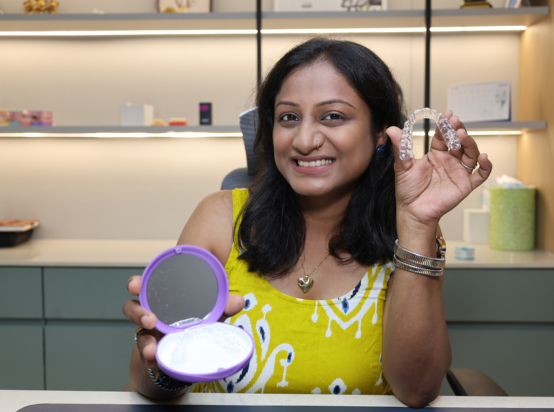
Clear aligners are custom-made transparent trays that move teeth gradually into position without wires or brackets. At Summirow Dental in Vesu, Surat, treatment is planned on a 3D digital scan by an Invisalign-certified specialist, typically takes 6–18 months, and starts with a free smile assessment that shows your predicted result first.
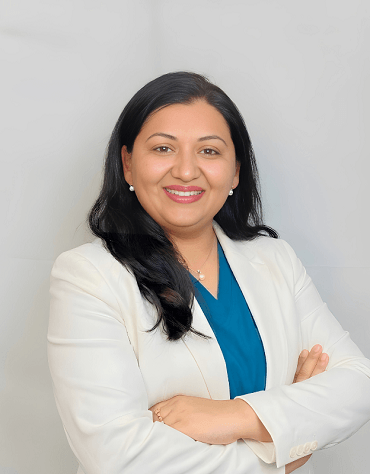
14+ years of clinical practice in Surat. Every aligner plan at Summirow is designed and supervised personally by Dr. Ushma — one specialist accountable from your first scan to your final retainer. Dental Council Reg. No. A 8579.
View full profile →Last updated: · Reviewed by a registered dental surgeon
Most people don't come to us saying "I have malocclusion." They say they've stopped smiling in photos. Here's what's usually behind that.
Misalignment isn't only cosmetic. Crowded teeth are harder to clean, so plaque, decay and gum inflammation build up in the overlaps. An uneven bite loads some teeth far more than others, which over years shows up as enamel wear, chipping, sensitivity and jaw-joint (TMJ) discomfort. And the part nobody puts on a chart: the habit of smiling with your mouth closed in every photograph, every meeting, every wedding album. Correction gets more complex — not less — the longer teeth drift.
Clear aligners are a series of custom-made, transparent trays that fit snugly over your teeth. Each tray applies gentle, precisely-calculated pressure to move specific teeth a fraction of a millimetre. You wear each set for 7–15 days, then switch to the next — and the sequence walks your teeth from where they are today to where your treatment plan says they should end up.
Your teeth are captured with an intra-oral 3D scan and CBCT where needed. The full movement sequence is simulated on screen before a single tray is made.
Removable for every meal, every brushing session, and any moment you'd rather not have them in — a wedding photo, a presentation, a date.
Progress reviews every 6–8 weeks confirm your teeth are tracking to plan. If something drifts, it's corrected early — not at the end.
Clear medical-grade trays that hug the teeth. Colleagues, cameras and clients generally miss them entirely.
Gentle continuous pressure instead of tightened wires. Expect mild tightness for a day or two per new tray — nothing sharp.
Out for meals, coffee, brushing, sport and big moments. Your treatment adapts to your calendar.
Rinse with lukewarm water, brush gently, store in the case. No special tools, no wax, no wire-clipping kit.
Brushing and flossing stay exactly as they were — the strongest long-term advantage aligners hold over fixed braces.
Because the whole sequence is engineered digitally, your final position is planned — not discovered along the way.
A free smile assessment includes a specialist examination, a 3D digital scan and your predicted result on screen — with a written, all-inclusive quote and zero obligation.
Vesu, Surat · Open 7 days · Consultation fee waived for aligner assessments booked from this page
Aligners suit most people with mild to moderate misalignment who will actually wear them 20–22 hours a day. Here's who we treat most often at Vesu.
Client-facing roles, daily video calls, stage time. Invisibility isn't vanity here — it's the whole reason treatment is possible at all.
Often people who were told "later" as a teenager, or whose teeth relapsed after braces years ago because retainers stopped.
Planning backwards from the wedding date. Come in early enough and the ceremony photos show the finished result, not the process.
Suitable once the permanent teeth are through. Compliance indicators and parental check-ins keep wear-time honest.
Crowding, spacing, mild overbite or crossbite, and post-braces relapse — the cases aligners handle most predictably.
If the thought of two years of visible metal is what has stopped you until now, this is the version of orthodontics you can actually say yes to.
Severe crowding, significant skeletal bite discrepancies, complex rotations and cases needing major tooth movement are often corrected faster and more reliably with fixed braces — sometimes with aligners afterwards for finishing. Summirow provides both aligners and braces, so the recommendation you get is based on your scan, not on what we happen to sell. If braces are genuinely the better tool for your case, we'll tell you that in the first consultation.
Dr. Ushma K. Kakkad — 14+ years, ICOI (USA) certified, Certified Invisalign Provider — personally designs and supervises every aligner plan. Not a technician, not a remote lab.
3D intra-oral scanning and in-house CBCT under one roof. Your simulation is produced from your own anatomy, not a stock preview.
Because we offer the full orthodontic range plus 11+ specialists across every dental discipline, our recommendation isn't limited by what we stock.
After your scan you receive an itemised quote with tray count and timeline. No mid-treatment surprises, no hidden refinement charges sprung on you later.
If your case needs a filling, a cleaning, gum treatment or a wisdom-tooth extraction before aligners start, it happens in the same building, on the same plan.
Straightening is half the job. Your retainer protocol is discussed and priced up front, because relapse is the number-one reason people need aligners twice.
BDS (Rajiv Gandhi University of Health Sciences). 14+ years of clinical practice in Surat, with every aligner, implant and smile-design case at Summirow planned under her supervision. Reg. No. A 8579.
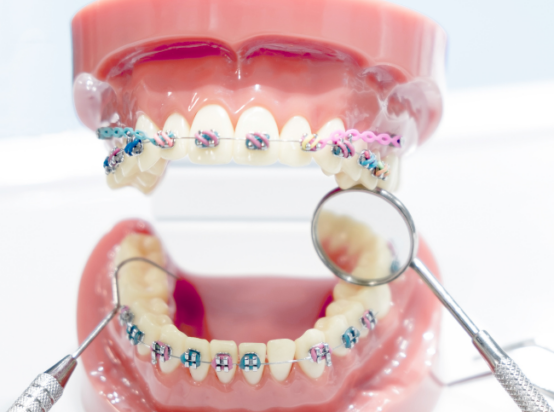
Aligner cases at Summirow are reviewed alongside our orthodontic, prosthodontic and periodontal specialists — so bite, gum health and restorative work are all considered before the first tray is fitted, not after.
Six stages, from your first visit to the smile you keep.
A specialist examines your teeth and bite, listens to what actually bothers you, and gives an honest verdict on whether aligners are the right tool for your case.
Intra-oral scanning, photographs and X-rays or CBCT where needed. No messy impression trays, no gagging.
You see your predicted final result on screen, plus tray count, expected duration and an all-inclusive price — before you commit to anything.
Your full series arrives. We fit the first set, place any attachments needed, and show you exactly how to insert, remove, clean and store them.
Short appointments to confirm your teeth are tracking to plan and hand over your next sets. Trays change every 7–15 days at home.
Final polishing of the result, then retainers to hold it. This step is not optional: retainers are what keep the result you paid for.
Real aligner cases treated at Summirow Dental, Vesu. Individual results vary with case complexity and how consistently trays are worn.
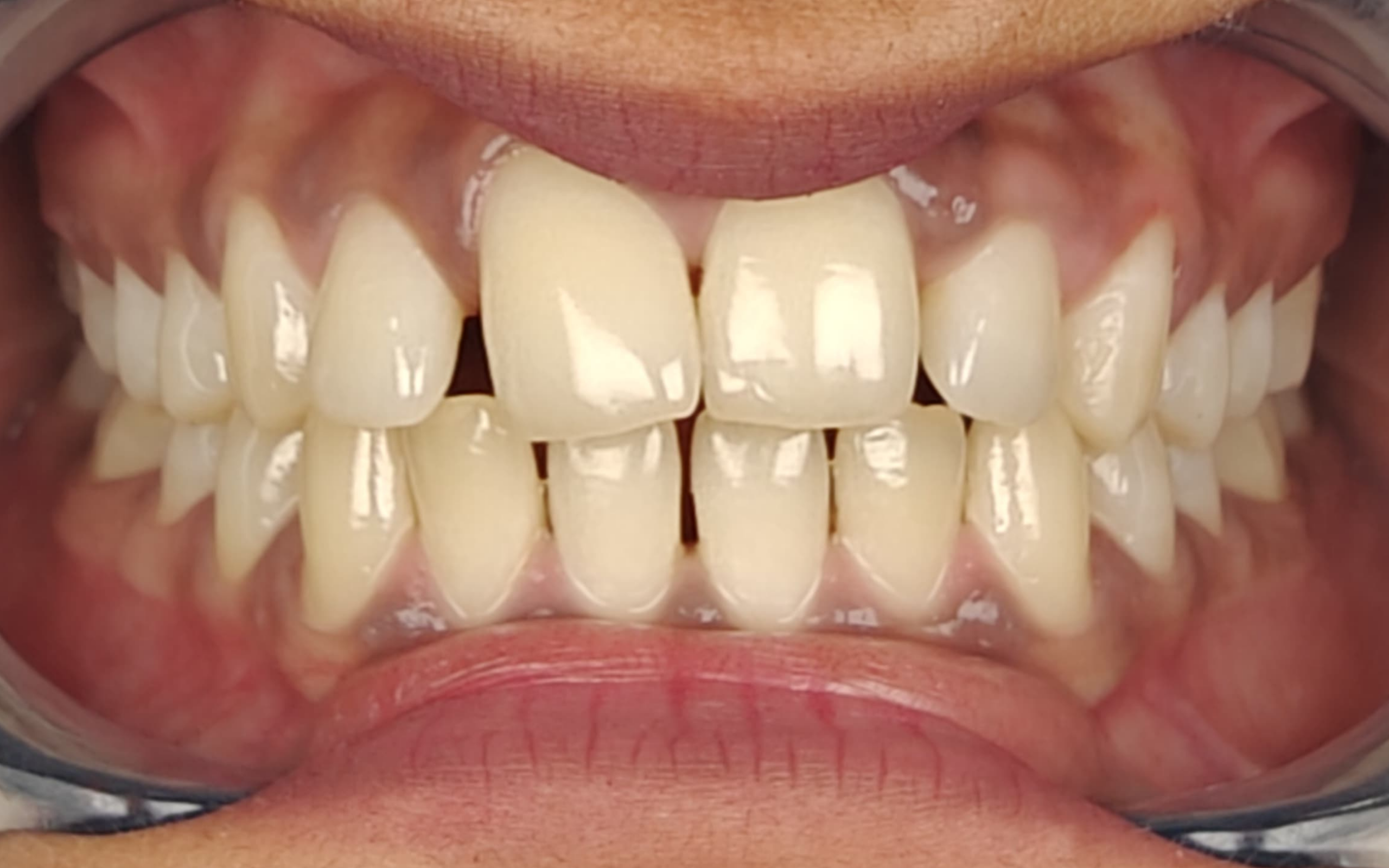
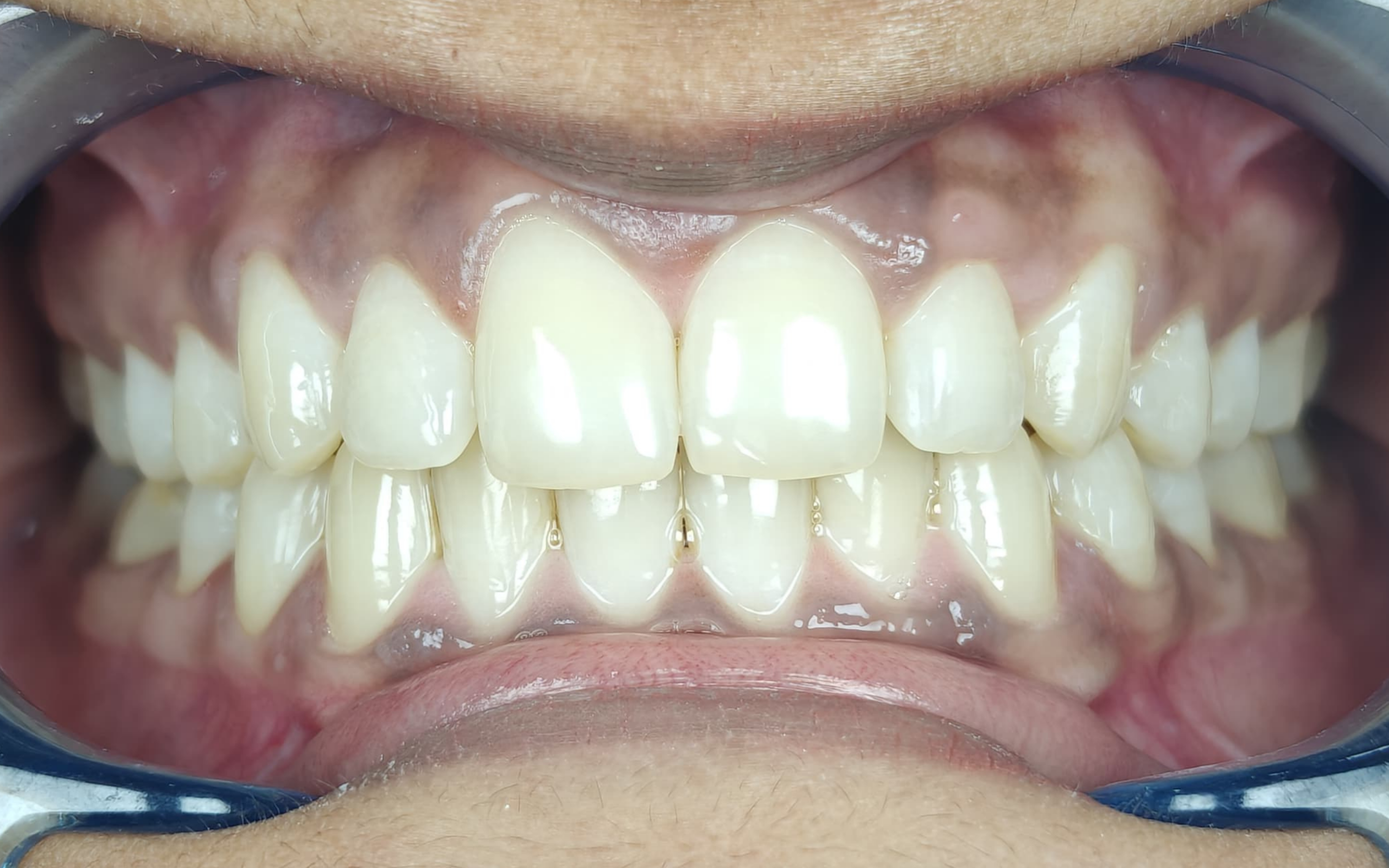
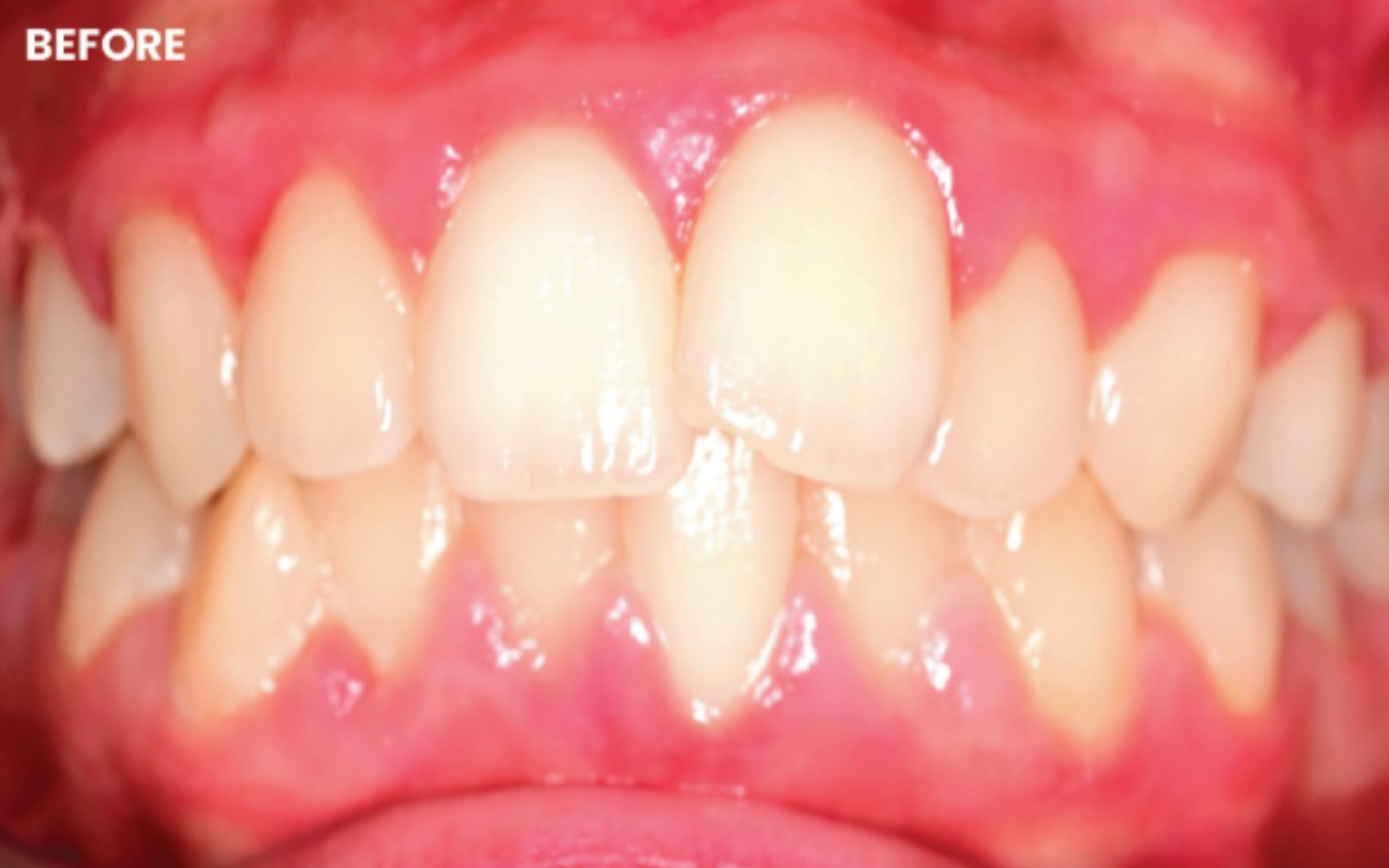
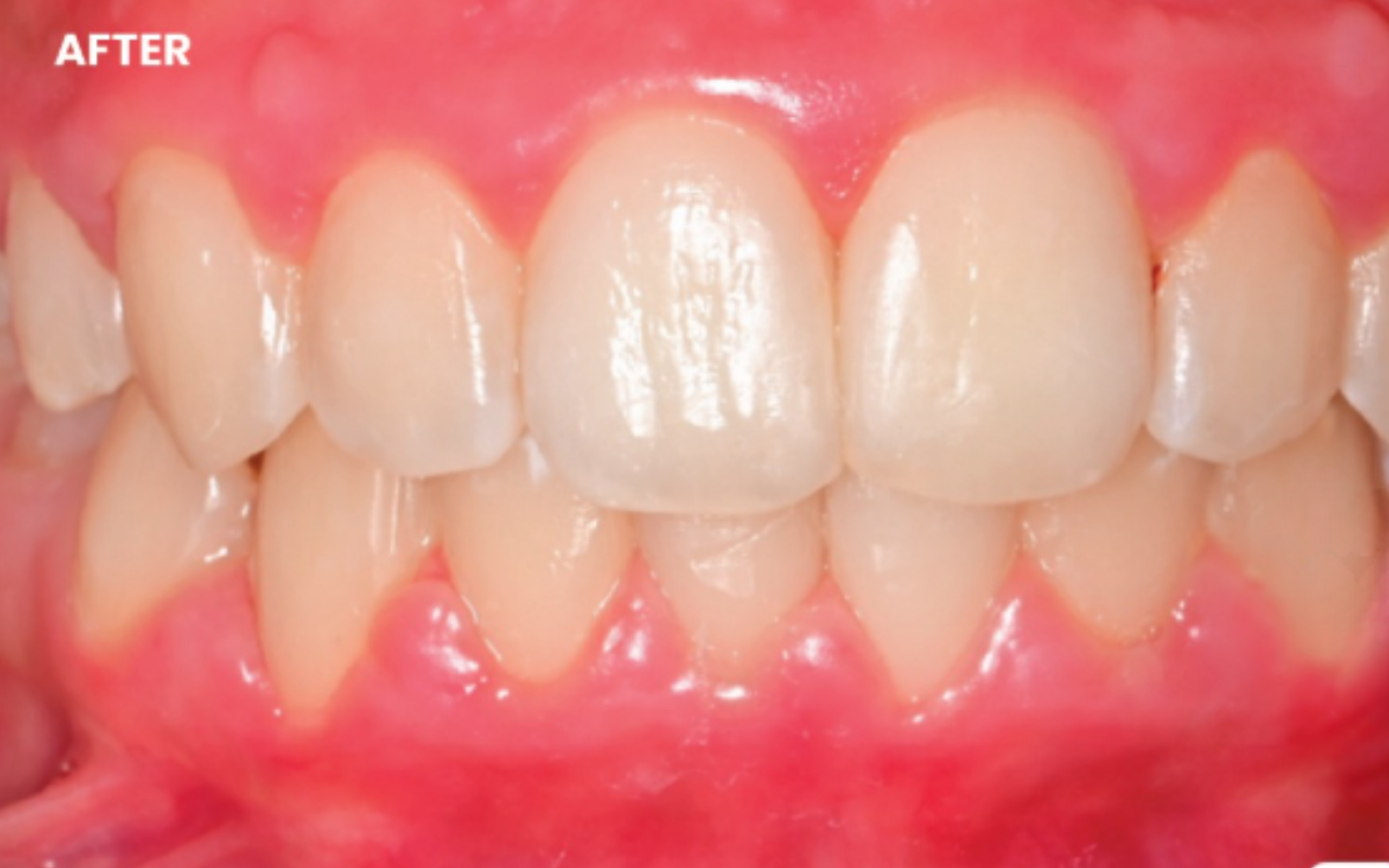
Photographs are of patients treated at Summirow Dental Hospital and are published with consent. Clinical outcomes differ from person to person; your own predicted result is shown during your free smile assessment.
"I work in sales and I'm on camera all day — braces were never going to happen. Nobody at work noticed I was in treatment for the entire year. The simulation they showed me on day one is almost exactly what I ended up with."
"I had braces at 16 and my teeth moved back because I stopped wearing the retainer. Dr. Ushma explained exactly why that happened and what we'd do differently. Ten months later and I finally like my photos."
"Booked six months before my wedding, which was cutting it fine. They planned the timeline around the date and were completely honest about what could and couldn't be finished in time. The reception photos were worth it."
All three straighten teeth. They differ in visibility, comfort, lifestyle impact and how complex a case they can handle.
| Factor | Clear Aligners | Metal Braces | Ceramic Braces |
|---|---|---|---|
| Appearance | Virtually invisible | Clearly visible metal | Tooth-coloured but visible up close |
| Comfort | Smooth plastic, no sharp edges | Brackets and wires can rub | Brackets can rub; bulkier than metal |
| Removable | Yes — for meals and brushing | No — fixed until debonding | No — fixed until debonding |
| Cleaning | Brush and floss normally | Needs interdental brushes and floss threaders | Same as metal; ties can stain |
| Food restrictions | None — trays come out | Avoid hard, sticky, chewy foods | Avoid hard, sticky and staining foods |
| Typical duration | 6–18 months | 18–30 months | 18–30 months |
| Clinic visits | Every 6–8 weeks, shorter | Every 3–4 weeks for adjustment | Every 3–4 weeks for adjustment |
| Best suited to | Mild to moderate crowding, spacing, relapse | Complex bites and severe misalignment | Moderate cases wanting discretion at lower cost than aligners |
| Discipline needed | High — 20–22 hrs/day is on you | Low — they're fixed on | Low — they're fixed on |
| Cost range | Highest of the three | Most economical | Mid-range |
→ Swipe the table sideways to compare all three
If your case is mild to moderate and you'll genuinely wear the trays, aligners give you the same result with none of the social cost — and they finish faster. If your bite needs significant correction, fixed braces remain the stronger clinical tool, and pretending otherwise would waste your money. Your 3D scan settles the question in one visit. Because Summirow provides all three options, the recommendation you receive is about your teeth, not our inventory.
There is no single honest number — and any clinic quoting one online before seeing your teeth is guessing. Aligner cost depends on how many trays your case needs, whether one arch or both are treated, whether attachments or refinements are required, and how long the plan runs.
Case complexity · number of aligner sets · single vs both arches · attachments and IPR · refinement stages · retainers.
A written, itemised, all-inclusive quote after your 3D scan — with tray count and timeline, before you pay anything.
Nothing. The smile assessment, 3D scan and simulation are free for aligner enquiries booked through this page.
Specialist assessment, 3D scan, on-screen smile simulation and a written all-inclusive quote — free, and with no obligation to proceed.
EMI and treatment financing options available — ask your treatment coordinator.
Clear aligners are custom-made, transparent plastic trays worn over the teeth to move them gradually into alignment. Each tray is worn 7–15 days before switching to the next in the series. They are removable, contain no wires or brackets, and are manufactured from a 3D digital scan of your own teeth.
Most cases complete in 6 to 18 months. Mild corrections and minor relapse cases can finish in a few months; comprehensive cases take longer. Your digital treatment plan shows the expected timeline, tray by tray, before you begin.
At normal conversational distance, almost never. The trays are made of clear medical-grade material that fits tightly against the teeth. Attachments — small tooth-coloured bumps used in some cases to grip the tray — are visible only at very close range.
No. Expect mild pressure or tightness for the first day or two of each new tray — that sensation is the teeth moving on schedule. There are no wires to poke and no bracket emergencies. Most patients find aligners considerably more comfortable than they expected.
20 to 22 hours daily — essentially always, except when eating, drinking anything other than water, and brushing. Consistent under-wearing slows tooth movement and extends your timeline. The removability is the freedom; the wear discipline is the price of it.
Yes. Trays come out for every meal, so no food is off limits. The only rule is to drink nothing but water while trays are in — hot drinks can warp them and coloured drinks stain them — and to brush before putting them back.
Cost depends on case complexity, the number of aligner sets required, and whether one or both arches are treated. Summirow does not publish a fixed figure because it would be misleading before a scan. After your free assessment and 3D scan you receive an exact, itemised, all-inclusive written quote with tray count and timeline.
Better for some cases, not all. Aligners win decisively on invisibility, comfort, hygiene and lifestyle freedom, and they handle mild to moderate crowding, spacing and relapse very well. Fixed braces remain stronger for complex bite corrections and severe misalignment. Summirow provides both, so the recommendation follows your scan rather than our stock.
Yes, once the permanent teeth have erupted and the teenager is ready to commit to 20–22 hours of daily wear. Aligner systems for teens include compliance indicators that fade with wear, so parents and clinicians can verify wear-time objectively.
Mild to moderate bite discrepancies can often be corrected with aligners, sometimes combined with elastics or attachments. Significant skeletal discrepancies may require fixed braces or, in some adult cases, a surgical opinion. Your CBCT and 3D scan determine which category you fall into.
Call the clinic immediately. Depending on where you are in the series, we will either advise you to move to the next tray early, revert to the previous one temporarily, or order a replacement. Do not leave the gap unmanaged — teeth begin drifting back within days.
Yes, permanently in some form. Teeth have memory and will drift back toward their original positions without retention. Retainers — usually nightly after an initial full-time period — are what protect the result you paid for. Relapse after stopping retainers is one of the most common reasons adults seek aligners a second time.
Often yes, with planning. Crowns and veneers can generally be moved, though attachments bond less reliably to porcelain. Implants do not move at all and must be planned around as fixed anchors. This is exactly why cases at Summirow are reviewed alongside our prosthodontic specialists before starting.
Roughly every 6 to 8 weeks for a short progress review, compared with every 3 to 4 weeks for fixed braces. Trays are changed by you at home every 7–15 days as directed.
Some patients notice a slight lisp during the first few days as the tongue adjusts to the trays. It almost always resolves within a week. Reading aloud for a few minutes a day speeds up the adaptation.
Generally it's best to whiten after alignment is complete, so that newly exposed surfaces whiten evenly. Some patients use their final retainers as whitening trays. Discuss the sequence with your specialist rather than starting whitening mid-treatment.
Usually not. Mild to moderate crowding is more often resolved with interproximal reduction (IPR) — polishing minute amounts of enamel between teeth — or slight arch expansion. Extractions are reserved for significant crowding, and would be discussed and justified fully before you agree to anything.
Summirow Dental Hospital is located on the 6th floor of Western Vesu Point, opposite SBI Bank and next to Reliance Market, Vesu Char Rasta, Surat 395007 — a straightforward drive from Athwa, Adajan, Pal and City Light. Call +91 93777 77303 or book a free smile assessment through the form on this page.
Yes. Summirow runs a dedicated NRI programme: your records are reviewed before you travel, scanning and tray fitting are compressed into your visit dates, additional tray sets are handed over for you to take home, and progress reviews continue remotely with your local dentist looped in when needed.
One free visit tells you three things: whether aligners suit your case, what your finished smile will look like, and exactly what it will cost. No pressure to proceed on the day.