Jaw pain, clicking sounds, facial tension, frequent headaches, these aren't quirks to be tolerated. They often point to TMJ disorder, a condition affecting the joint responsible for everything from chewing and speaking to smiling. At Summirow Dental Hospital, TM joint treatment in Surat, Gujarat begins by identifying the root cause of your discomfort rather than muting the symptom, because temporary fixes are exactly what bring patients back to us from somewhere else. Our approach is conservative-first, non-surgical wherever possible, and built around restoring proper jaw function while reducing pain, stiffness, and muscle strain.
TMJ disorder rarely announces itself clearly; it arrives as a collection of small complaints that seem unrelated. If you experience any of the following, a TMJ evaluation is worth your time:
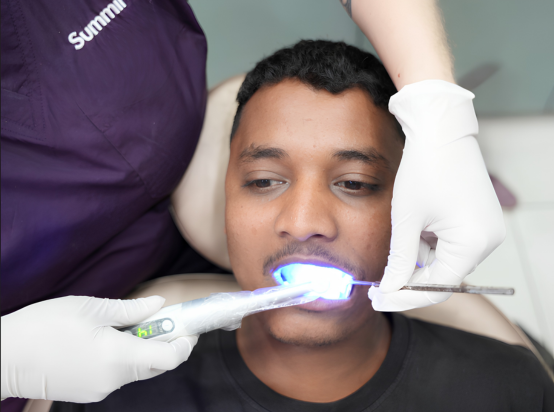
CBCT scans, digital imaging, and bite analysis examine joint structure, muscle activity, and jaw movement accurately — before anything is recommended.
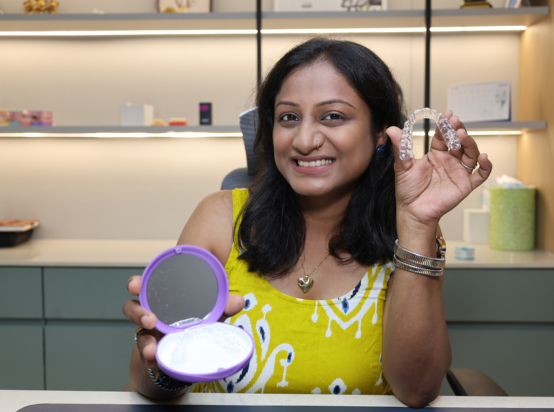
Individually designed splints reduce teeth grinding, relax jaw muscles, and protect the joint while you sleep — where most of the damage quietly happens.
Where bite imbalance is driving the TMJ stress, selective reshaping or restorative treatment improves jaw alignment and removes the cause.
Guided jaw exercises to restore flexibility and strength, plus warm compress and trigger-point techniques to release muscle tension around the joint.
TMJ disorder — also called TMD — refers to conditions affecting the temporomandibular joint and the muscles around it. It ranges from mild discomfort to chronic pain that interferes with daily life. It’s usually caused by:
We follow a conservative, non-surgical approach wherever possible, focused on comfort, stability, and long-term joint health.
Minimal surgical intervention, always. Most TMJ cases resolve with splints, physiotherapy, and bite correction, and we exhaust those before anything else is discussed.
Precise diagnosis on-site. Jaw joints are difficult to read without proper 3D imaging, and guessing is how TMJ gets mistreated for years.
Experienced clinicians who understand that TMJ is a pain condition as much as a dental one, and who collaborate with other specialists when your case needs it.
Treatment plans shaped by your symptoms, your stress, and your habits, with the focus on long-term jaw stability rather than short-term relief.
Posted on Google![]()
Basudha ShaktiTrustindex verifies that the original source of the review is Google.
I liked tretment and staff was good bhaviar also doctorPosted on Google![]()
Vasava HarshitaTrustindex verifies that the original source of the review is Google.
Excellent experience the treatment was explained properly and clearlyPosted on Google![]()
Ashvini GiraseTrustindex verifies that the original source of the review is Google.
The entire team was friendly and professional which made me feel comfortable during my dental treatmentPosted on Google![]()
Smeeta BaradTrustindex verifies that the original source of the review is Google.
The hospital provides a comfortable environment and the staff is always ready to help and guide the patientPosted on Google![]()
Tehsin AnsariTrustindex verifies that the original source of the review is Google.
Very good dental care The staff was caring and professional
Usually a combination rather than a single culprit: teeth grinding or clenching (bruxism), jaw misalignment, stress, injury to the jaw, arthritis, or habits like excessive gum chewing. Stress and posture play a far larger role than most people expect, which is why treating only the teeth often doesn't resolve it.
Jaw pain or tenderness, clicking or popping sounds, difficulty opening or closing your mouth, headaches, ear pain or pressure without infection, and jaw locking or stiffness. The ear and headache symptoms are why many TMJ patients see an ENT or a neurologist first. If you've been told your ears are fine but the pressure persists, your jaw is worth checking.
Sometimes mild, stress-related episodes settle. But untreated TMJ problems frequently worsen, leading to chronic headaches, restricted jaw movement, and damage to the joint itself. The longer a joint is loaded incorrectly, the harder it becomes to correct. Waiting is rarely the cheaper option.
Almost certainly not. This is the biggest fear patients arrive with, and the answer is reassuring: most TMJ cases respond well to non-surgical treatment, such splints, physiotherapy, bite correction, and muscle therapy. Our approach is conservative-first by design, and surgery is a last resort discussed only when everything else has genuinely been exhausted.
Treatment depends on severity and cause, and typically includes custom night guards or splints, jaw relaxation exercises and physiotherapy, bite correction or dental adjustment where needed, short-term pain and anti-inflammatory management, and stress management guidance. Your CBCT scan and bite analysis determine which combination your case actually needs.
Genuinely, yes — more than for most dental conditions. Avoiding hard and chewy foods, reducing stress, maintaining good posture, not chewing gum, and limiting jaw strain all improve symptoms measurably and support whatever clinical treatment you're having. We'll give you a specific list based on what's driving your case.
It depends on the type and duration of treatment. Indicative ranges: • TMJ splints or night guards: ₹2,000 – ₹10,000 • Conservative TMJ therapy sessions: ₹1,000 – ₹5,000 per visit • Advanced or long-term management plans: varies by case severity Final cost is determined after clinical evaluation and diagnosis — and because TMJ care is staged rather than one-off, you'll know the plan and its cost before committing to it.
We understand just how closely connected oral health is to your overall health, confidence, and appearance, and we pride ourselves on cultivating a friendly, upbeat dental environment where you can always feel comfortable.
Copyright © 2026 Summirow Dental All Rights Reserved. Developed by Riofos