Most dental problems begin where you can't see them, below the gumline, inside a root, deep in the bone. That's why accurate diagnosis is the most important step in dentistry: the right treatment always begins with the right understanding of the problem. Oral diagnosis and radiology in Surat at Summirow Dental Hospital combines thorough clinical evaluation with advanced imaging, CBCT, OPG, and low-radiation digital X-rays. so nothing is guessed at, nothing is missed, and every treatment plan is built on what's actually there.
Many dental problems develop below the surface and simply cannot be seen during an examination, however careful. Imaging is what turns a suspicion into a diagnosis:
Digital sensors and low-dose techniques mean modern dental imaging uses a fraction of the radiation older film systems required, with protective measures at every scan.
Most scans take seconds. No discomfort, no preparation, no waiting days for a report from somewhere else.
You see what we see. Every image is walked through with you in plain language, because informed patients make better decisions about their own care.
In-house digital imaging means diagnosis, planning, and treatment all happen under one roof, no referrals, no delays, no repeat scans.
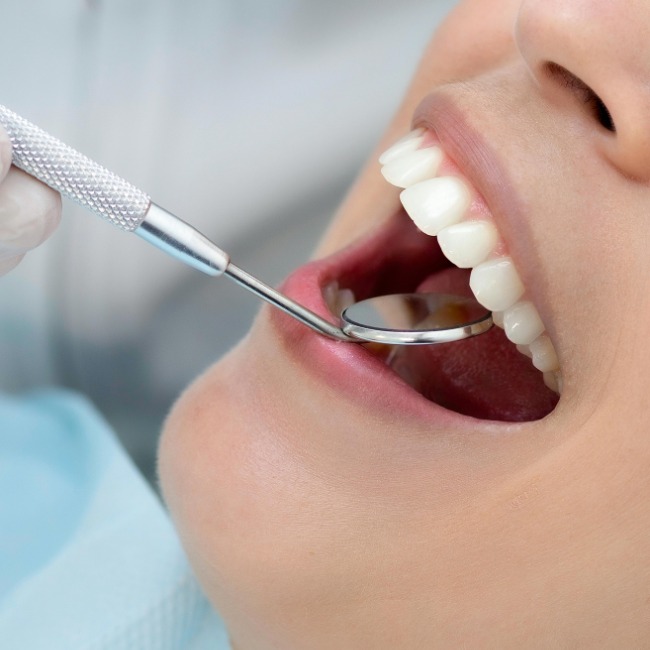
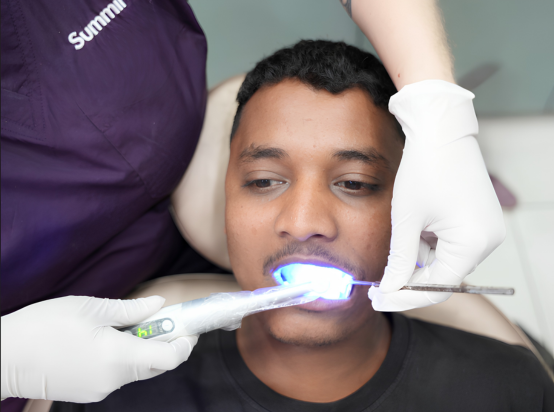
Oral diagnosis is the careful examination of your teeth, gums, jaw, and oral tissues to identify problems, including those a routine check-up would never reveal. It covers:
Modern imaging lets us see hidden structures inside the mouth and jaw, safely, quickly, and in detail.
Advanced digital radiology on-site means your scan, your diagnosis, and your treatment plan happen in one visit, not across three appointments at three addresses.
Experienced clinicians who read images properly. The scan is only as good as the person interpreting it, and that's where problems are caught or missed.
Our focus is finding things while they're small. A cavity caught on a bitewing is a filling; the same cavity found by pain is a root canal.
Imaging isn't a standalone service here; it's integrated into comprehensive treatment planning, so what we find shapes what we recommend.
Posted on Google![]()
Basudha ShaktiTrustindex verifies that the original source of the review is Google.
I liked tretment and staff was good bhaviar also doctorPosted on Google![]()
Vasava HarshitaTrustindex verifies that the original source of the review is Google.
Excellent experience the treatment was explained properly and clearlyPosted on Google![]()
Ashvini GiraseTrustindex verifies that the original source of the review is Google.
The entire team was friendly and professional which made me feel comfortable during my dental treatmentPosted on Google![]()
Smeeta BaradTrustindex verifies that the original source of the review is Google.
The hospital provides a comfortable environment and the staff is always ready to help and guide the patientPosted on Google![]()
Tehsin AnsariTrustindex verifies that the original source of the review is Google.
Very good dental care The staff was caring and professional
Yes. Modern digital dental X-rays use very low radiation, a fraction of what older film systems required, and every scan is taken with protective measures in place. To put it in perspective, a routine dental X-ray exposes you to less radiation than a few hours of ordinary background exposure you'd receive anyway. If you're pregnant or have any concern, tell us and we'll plan accordingly.
No - related, but not the same. Oral diagnosis is the complete process of identifying an oral health problem: clinical examination, your history, and imaging together. Dental X-rays are one tool used within that process. In short: oral diagnosis is the investigation; X-rays are one of the instruments. Both matter, because an image without clinical judgement is just a picture.
CBCT (cone beam computed tomography) produces a three-dimensional image of your teeth, jaw, and surrounding structures where a standard X-ray gives a flat, two-dimensional view. That third dimension matters enormously for planning dental implants, assessing impacted wisdom teeth near nerves, investigating complex root canal anatomy, and evaluating jaw injuries. If you're being planned for implants or complex surgery, a CBCT isn't an upsell, it's how the procedure is made safe.
Bitewing X-rays detect cavities between teeth. Periapical X-rays show a whole tooth including its root and surrounding bone. OPG gives a single panoramic view of your full mouth and jaws. CBCT provides 3D imaging for surgical and implant planning. Which one you need depends entirely on the question being asked; we use the least imaging that will answer it properly.
Whenever there's tooth pain, suspected infection, a deep cavity, gum disease, or trauma, and always before procedures like root canals, extractions, and implants. Also at routine check-ups periodically, because that's when problems are found early and cheaply rather than late and expensively.
Yes - we regularly perform scans for patients referred by other clinics, and you'll receive your images and report to take back to your dentist. You don't need to change dentists to use our imaging. Just bring the referral note or tell us what your dentist has asked for. [VERIFY WITH CLIENT — see the flags. If Summirow doesn't accept external referrals, delete this FAQ.]
Indicative ranges: • Basic dental X-ray: ₹150 - ₹500 • OPG scan: ₹500 - ₹1,200 • Advanced digital imaging: ₹800 - ₹2,500 Final cost depends on what your diagnosis requires. And worth knowing: when imaging is part of a treatment plan with us, it's quoted within that plan rather than billed as a surprise extra.
We understand just how closely connected oral health is to your overall health, confidence, and appearance, and we pride ourselves on cultivating a friendly, upbeat dental environment where you can always feel comfortable.
Copyright © 2026 Summirow Dental All Rights Reserved. Developed by Riofos